In the world of industrial machinery and ventilation systems, the fan impeller stands as a crucial and often underestimated component. As a long – standing fan impeller supplier deeply involved in the industry, I have witnessed firsthand the diverse applications and the significance of understanding the pressure generated by a fan impeller. In this blog, we will embark on a comprehensive exploration of this topic, delving into the fundamental concepts, the influencing factors, and the practical implications in various fields. Fan Impeller
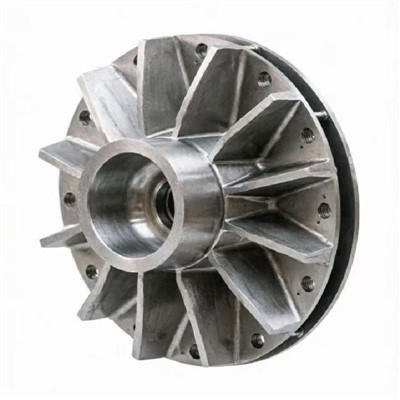
The Basics of Fan Impeller Pressure
To begin with, it’s essential to understand what we mean by the pressure generated by a fan impeller. Fundamentally, a fan impeller is a mechanical device designed to transfer energy to air or gas, resulting in the movement of the fluid. The pressure it generates is a measure of the force exerted by the impeller on the fluid per unit area.
There are two main types of pressure associated with a fan impeller: static pressure and total pressure. Static pressure is the pressure exerted by the fluid on the walls of the duct or enclosure. It is independent of the fluid’s velocity and represents the energy stored in the fluid due to its compression. Total pressure, on the other hand, is the sum of static pressure and dynamic pressure. Dynamic pressure is related to the fluid’s velocity and represents the kinetic energy of the moving fluid.
Fan impellers create pressure through the rotation of their blades. As the blades spin, they accelerate the fluid, causing a change in both its velocity and pressure. The design and geometry of the impeller blades play a crucial role in determining how effectively this energy transfer occurs.
Factors Influencing Fan Impeller Pressure
A multitude of factors affect the pressure generated by a fan impeller. One of the most significant factors is the impeller’s design, including the shape, number, and angle of the blades. For instance, backward – curved blades are known for their high – efficiency operation and can generate relatively high static pressures. In contrast, forward – curved blades are often used in applications where a large volume of air needs to be moved at relatively low pressures.
The rotational speed of the impeller also has a direct impact on the pressure. Generally, as the impeller rotates faster, it can impart more energy to the fluid, resulting in higher pressures. However, increasing the rotational speed also leads to increased power consumption and may generate more noise.
The density of the fluid being moved is another critical factor. Since pressure is related to the force exerted on the fluid, a denser fluid such as air at a lower altitude or a liquid will require more energy to move and can result in higher pressures being generated by the impeller.
The size of the impeller, specifically the diameter and width, can also influence the pressure. Larger impellers can typically move more fluid and generate higher pressures, but they also require more power to operate.
Measuring Fan Impeller Pressure
Accurately measuring the pressure generated by a fan impeller is crucial for ensuring its proper operation and performance. There are several methods and instruments available for this purpose.
One common instrument is the manometer, which measures static pressure. A manometer consists of a U – shaped tube filled with a liquid, usually water or mercury. The difference in the liquid levels in the two arms of the tube indicates the pressure difference between the two points being measured.
For measuring total pressure, a pitot tube is often used in combination with a manometer. A pitot tube has two ports: one facing directly into the fluid flow to measure the total pressure, and another on the side to measure the static pressure. The difference between the two readings gives the dynamic pressure.
Modern measurement techniques also often involve the use of electronic sensors, which can provide more accurate and real – time pressure readings, and can be integrated into control systems for better monitoring and adjustment of the fan impeller’s operation.
Practical Applications and the Importance of Fan Impeller Pressure
The pressure generated by fan impellers finds a wide range of applications across various industries. In HVAC (Heating, Ventilation, and Air Conditioning) systems, fan impellers are used to circulate air through ducts and maintain proper air distribution in buildings. In this context, the ability of the impeller to generate sufficient static pressure is crucial for overcoming the resistance of the ductwork, filters, and other components in the system.
In industrial processes such as chemical manufacturing, mining, and power generation, fan impellers are used for ventilation, exhaust, and conveying gases or dust particles. The pressure generated by the impeller determines the efficiency of these processes, as it affects the flow rate and the ability to move the fluids over long distances or through complex piping systems.
In the automotive industry, fan impellers are used in engine cooling systems. The pressure generated by the impeller helps to draw air through the radiator, removing heat from the engine coolant. Ensuring the right pressure is crucial for maintaining the optimal operating temperature of the engine.
Optimizing Fan Impeller Pressure for Different Applications
As a fan impeller supplier, we understand the importance of tailoring our products to meet the specific pressure requirements of different applications. To optimize the pressure generation of fan impellers, several considerations need to be taken into account.
First, a thorough understanding of the application’s requirements is essential. This includes factors such as the desired flow rate, the distance the fluid needs to be moved, and the resistance in the system. Based on this information, an appropriate impeller design can be selected.
We also conduct extensive testing and simulation to fine – tune the impeller’s performance. Computational Fluid Dynamics (CFD) simulations are increasingly being used to model the flow of fluid around the impeller blades and predict the pressure generation. This allows us to make adjustments to the blade geometry, angle, and other parameters to achieve the optimal pressure – flow characteristics.
In addition, we continuously explore new materials and manufacturing processes to improve the efficiency and durability of our fan impellers. Using high – strength and lightweight materials can reduce the power consumption required to rotate the impeller while maintaining its structural integrity.
Conclusion and Call to Action
In conclusion, the pressure generated by a fan impeller is a complex yet crucial aspect of its performance. It is influenced by multiple factors, and its accurate measurement and optimization are essential for a wide range of applications. As a trusted fan impeller supplier, we are committed to providing high – quality products that meet the specific pressure requirements of our customers.

Whether you are in the HVAC industry, industrial manufacturing, automotive engineering, or any other field that requires reliable fan impellers, we have the expertise and experience to offer you the right solutions. Our team of engineers and technicians is always ready to work with you to understand your needs and develop customized fan impellers that deliver the optimal pressure and performance.
Pump Impeller If you are interested in learning more about our fan impellers or would like to discuss your specific requirements, please feel free to contact us. We look forward to the opportunity to collaborate with you and contribute to the success of your projects.
References
- ASHRAE Handbook – Fundamentals. American Society of Heating, Refrigerating and Air – Conditioning Engineers.
- Fluid Mechanics, by Frank M. White.
- Fan Engineering: The Application of Axial, Centrifugal, and Cross Flow Fans, by Buffalo Forge Company.
Shandong Shunye Stainless Steel Co., Ltd.
Shandong Shunye Stainless Steel Co., Ltd. is one of the most professional fan impeller manufacturers and suppliers in China, also supports customized service. Welcome to buy bulk cheap fan impeller made in China here and get quotation from our factory. For price consultation, contact us.
Address: Shandong Province, Binzhou City, Wudi County, Liubao Town, Zhangdong Road, Duliucun Village
E-mail: sales@wdshunye.com
WebSite: https://www.shunyecasting.com/
