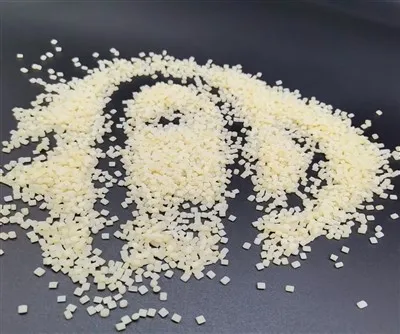
Hey there! I’m a rep from a conductive polymer supplier, and I’ve been knee – deep in this industry for quite a while. Conductive polymers are super cool materials with a ton of potential in various fields, from electronics to energy storage. Today, I wanna chat about the skills you need if you’re looking to make a career in conductive polymer research. Conductive Polymer
1. Strong Foundation in Chemistry
First off, you gotta have a solid background in chemistry. Conductive polymers are all about chemical structures and reactions. Organic chemistry is a must – know. You need to understand how different monomers react to form polymers and how to control the polymerization process. For example, when we’re making a conductive polymer like polyaniline, we need to know the right conditions for the aniline monomers to link up in the right way.
Physical chemistry also plays a huge role. It helps you understand the electrical and thermal properties of these polymers. You’ll be dealing with concepts like conductivity, which is basically how well the polymer can carry an electric current. Thermodynamics is another key area. Knowing how heat affects the polymer’s structure and properties is crucial, especially when we’re looking at applications where the polymer might be exposed to different temperatures.
Analytical chemistry is essential too. You’ll be using techniques like NMR (Nuclear Magnetic Resonance) and IR (Infrared) spectroscopy to analyze the structure of the polymers. These methods help us figure out what’s going on at the molecular level, like the arrangement of atoms and the presence of functional groups.
2. Material Science Knowledge
Material science is like the bridge between chemistry and engineering. In conductive polymer research, you need to know how to design and develop materials with specific properties. You’ll be looking at things like mechanical strength, flexibility, and stability. For instance, if we’re making a conductive polymer for use in flexible electronics, we need to ensure that it can bend and stretch without losing its conductivity.
Understanding the processing techniques for conductive polymers is also important. There are different ways to make these polymers into useful forms, like casting them into films or spinning them into fibers. Each method has its own advantages and challenges, and you need to know which one is best for a particular application.
You should also be familiar with the properties of different additives and fillers. Sometimes, we add things like carbon nanotubes or metal nanoparticles to enhance the conductivity or other properties of the polymer. Knowing how these additives interact with the polymer matrix is key to getting the desired performance.
3. Electrical Engineering Basics
Since conductive polymers are all about conducting electricity, having some knowledge of electrical engineering is a big plus. You need to understand basic electrical concepts like voltage, current, and resistance. This knowledge helps you measure and analyze the electrical properties of the polymers.
You’ll also be working on circuits and devices that use conductive polymers. For example, in organic light – emitting diodes (OLEDs), conductive polymers are used as the active layer. Understanding how these devices work and how to optimize their performance requires a good grasp of electrical engineering principles.
Being able to design and test electrical circuits is an important skill. You’ll need to set up experiments to measure the conductivity of the polymers under different conditions and to evaluate their performance in real – world applications.
4. Research Skills
Research is at the heart of conductive polymer research. You need to be able to come up with new ideas and hypotheses. This involves staying up – to – date with the latest research in the field. Reading scientific journals and attending conferences are great ways to learn about new developments and trends.
Once you have an idea, you need to be able to design and conduct experiments. This includes planning the experimental setup, choosing the right materials and equipment, and collecting and analyzing data. You’ll need to be detail – oriented and able to troubleshoot any problems that arise during the experiments.
Writing research papers is also an important part of the job. You need to be able to communicate your findings clearly and effectively to the scientific community. This requires good writing skills and the ability to present your data in a logical and organized way.
5. Problem – Solving Abilities
In conductive polymer research, you’re bound to run into problems. Maybe the polymer isn’t conducting as well as you expected, or it’s not stable under certain conditions. You need to be able to think critically and come up with solutions.
This might involve adjusting the chemical composition of the polymer, changing the processing conditions, or trying different additives. You’ll need to be creative and willing to try new things. Sometimes, the solution might not be obvious, and you’ll have to do a lot of trial and error.
6. Teamwork and Communication
Conductive polymer research is often a team effort. You’ll be working with other researchers, engineers, and technicians. Being able to work well in a team is crucial. You need to be able to share your ideas, listen to others, and collaborate effectively.
Communication skills are also important. You’ll need to communicate your research findings to your team members, as well as to other stakeholders like investors or industry partners. This includes giving presentations and writing reports.
7. Computer Skills
In today’s world, computer skills are a must. You’ll be using software for data analysis, molecular modeling, and simulation. For example, you can use molecular modeling software to predict the structure and properties of conductive polymers before you actually make them.
You’ll also need to be familiar with basic office software like Microsoft Word and Excel for writing reports and analyzing data. And if you’re working on developing new manufacturing processes, you might need to use programming languages like Python for automation and control.
Why These Skills Matter to Us as a Supplier
As a conductive polymer supplier, we rely on researchers with these skills to develop new and improved products. When researchers have a strong foundation in chemistry, they can create polymers with better performance and more consistent quality. Material science knowledge helps us understand how to process these polymers into useful forms and how to optimize their properties for different applications.
Electrical engineering skills are essential for us to ensure that our conductive polymers meet the requirements of electrical devices. Research skills allow us to stay ahead of the competition by coming up with new ideas and innovations. Problem – solving abilities help us overcome any challenges that arise during the development and production process.
Teamwork and communication skills are important because they enable us to work effectively with our customers and partners. And computer skills help us streamline our operations and make better use of data.
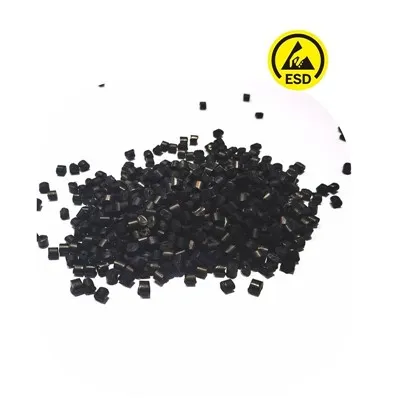
Super Conductive Material If you’re interested in conductive polymers and have some of these skills, we’d love to hear from you. Whether you’re a researcher looking for a new challenge or a company interested in our products, we’re here to have a chat. Reach out to us to discuss potential collaborations or to place an order. We’re always open to new opportunities and are excited to see what we can achieve together.
References
- "Conductive Polymers: Fundamentals and Applications" by J. R. Reynolds
- "Handbook of Conducting Polymers" edited by T. A. Skotheim, R. L. Elsenbaumer, and J. R. Reynolds
- Various research articles from journals such as "Advanced Materials", "Macromolecules", and "Journal of Polymer Science"
Jiangxi Sugo Advanced Materials Co., Ltd.
With abundant experience, we are one of the most professional conductive polymer manufacturers in China. Please feel free to buy high quality conductive polymer in stock here and get free sample from our factory. We also accept customized orders.
Address: 1st Fugong Rd, Futian Industrial Park, Dingnan, Ganzhou City, Jiangxi Prov., R.P.C 341900
E-mail: EILEEN@SUGOPLAS.COM
WebSite: https://www.sugo-esd.com/
