Hey everyone, it’s Jake from the FKM O-ring team, and I get this question at least a dozen times a week: “Can FKM O rings be customized?” If you’re a parts buyer, a mechanic, or an engineer sourcing for a heavy-duty project, you’ve probably wondered the same thing. Off-the-shelf O-rings work for basic stuff, but if you’re dealing with extreme temperatures, harsh chemicals, or a super specific application? Generic just doesn’t cut it. Let me break this down straight—no fancy jargon, just what we do day in and day out as a supplier. FKM O Ring

First off, let’s make sure we’re all on the same page about FKM O rings, because there’s still a lot of confusion out there. FKM (sometimes people call it Viton, which is a brand name but often used generically) is that synthetic rubber that’s basically built to survive abuse. Think acids, fuels, high temps up to like 400°F, even ozone. It’s way tougher than nitrile or EPDM, so if your project needs parts that won’t dissolve or crack after a few uses, FKM is the go-to. But standard FKM O rings only come in so many sizes and grades, right? 50 durometer, 70 durometer, 90 durometer—those hardness numbers matter, by the way. 70 is the most common, good for a lot of general use, but if you need something softer for a dynamic seal (like moving parts) or harder for static, you can’t grab that off a shelf. That’s where customization comes in.
Wait, let’s get specific about what customizing an FKM O ring actually means. It’s not just swapping a size, though size is a big one. I’ve had customers come to us with a machine part that wore out, and the off-the-shelf ring they tried was just a hair too big or too small, causing leaks. We can tweak the inner diameter, outer diameter, cross-sectional thickness down to thousandths of an inch. But it’s not just dimensions. Material grades are a huge part of customization too. Not all FKM is the same. Some FKM is formulated for automotive engine compartments where it’s exposed to gasoline and motor oil. Another grade is for chemical processing plants where it’s sitting in strong acids all day. We can mix the base FKM with additives—reinforcements like carbon fiber for extra tear resistance, or lubricants to make it easier to install on tight fittings, or even color coding if that helps with quality control on your assembly line. I know one customer in food and beverage asked for FDA-compliant FKM, which isn’t standard in most off-the-shelf stock, so we work with our suppliers to adjust the formulation to meet that. That’s the kind of customization that makes a difference.
Let me also talk about the process, because I think a lot of people think custom parts take forever or cost a fortune. It depends on the volume, obviously, but small runs don’t have to be a headache. When a customer first reaches out, we start with their specs. What are they using the O ring for? What’s the operating temp? What chemicals is it exposed to? Do they have a sample of the old O ring that worked (or didn’t work)? If they don’t have a sample, we can get the exact dimensions from their part drawing, no problem. Then we move to mold design. For small runs, we use low-cost tooling, not the super expensive heavy-duty molds for 100,000 parts. For larger orders, we can build custom molds that last for years. Wait, a lot of people ask: how small of a run can you do? I’ve done runs as low as 50 O rings for a small repair shop needing one-off parts, and as high as a million for a big manufacturing plant. No minimum order? Wait, no, not exactly—for super tiny runs, tooling costs might make it not worth it, but we’re pretty flexible. We’ve worked with startups that only need 200 parts to test a new product, and we make it happen.
Let me share a quick example to make this real. Last year, a guy from a mining equipment company hit us up. He said their dump trucks’ hydraulic O rings kept failing in the desert—temperatures over 120°F, plus they were exposed to dirt and mining chemicals. The standard 70 durometer FKM they were using would crack after a month. We customized two things: first, we made it 80 durometer, so it was harder and more resistant to wear from dirt. Second, we added a tiny amount of graphite to the FKM formulation, so it didn’t stick to the cylinder wall when the hydraulic arm moved. The first batch we made for him lasted 6 months, way longer than the standard ones. He ended up ordering 50,000 more. That’s the kind of customization that solves actual problems, not just “we need a weird size.”
Wait, are there limits to what we can do? Yeah, let’s be honest. You can’t just make an O ring out of any random material. FKM has its own range, and if your application is something like -40°F, standard FKM might get too brittle—for that, we can use low-temperature FKM, which is a custom formulation. Also, if you need something way thicker than 1/4 inch cross-section, O rings start to get impractical, but we can adjust. And we can’t make sizes smaller than like 1/8 inch inner diameter for most custom runs, but that covers almost all industrial and automotive uses. We also don’t do super complex shapes, but wait—wait a second, O rings are technically toroidal, but sometimes people call custom seals “O rings” when they’re slightly modified, like a back-up ring or a quad ring? We do those too, but mostly for FKM, so that’s part of the customization we handle.
Another big point: a lot of suppliers will say they do custom O rings, but they just sell pre-made molds with different sizes. That’s not real customization. Real customization is adapting the material to your application, not just changing the size. I see this all the time—customers come back to us because another supplier sold them a “custom” O ring that was the right size but dissolved in their chemical, or cracked in the cold. We test every custom batch before we ship it, too. We do compression set tests, chemical resistance tests, temperature cycling. That’s how we make sure the custom FKM O ring works for you, not just looks right on paper.
Let’s talk about cost, because I know that’s a big concern. Custom parts do cost a bit more than off-the-shelf, but it’s not the insane markup some people think. For small runs, you’re paying for the tooling, but if you’re ordering more than 1,000 parts, the tooling cost gets spread out, so per unit cost is almost the same as standard. For example, a standard 1 inch FKM O ring is like $0.50 each. A custom size for 5,000 parts is like $0.60 each—way worth it if it means your machine doesn’t break down every week. For large runs (100,000+), custom is often cheaper than trying to adapt a standard part that doesn’t work, because downtime is way more expensive than a few extra cents per part. I’ve had customers tell me their line was down for $10,000 a day waiting for a working O ring, so spending an extra $500 on custom parts is a no-brainer.
Wait, what about lead times? Standard O rings ship next day, custom is usually 1 to 2 weeks. We can rush orders if someone’s in a pinch—last month, a food processing plant had a seal leak that shut down their line, and we had a custom FKM O ring ready in 3 days. We’re not the kind of supplier that makes you wait 6 weeks for a custom mold. We keep a lot of base FKM material in stock, so we can turn things around fast.
So, let’s wrap this up. If you’re here wondering “Can FKM O rings be customized?” the answer is a resounding yes. We do it every single day. Whether you need a weird size for a prototype, a material grade that stands up to your specific chemicals, or a modified formulation for extreme temps, we can make that happen. We’re not a big corporate supplier that only sells off-the-shelf stock—we’re the team that works with you to solve your seal problems.
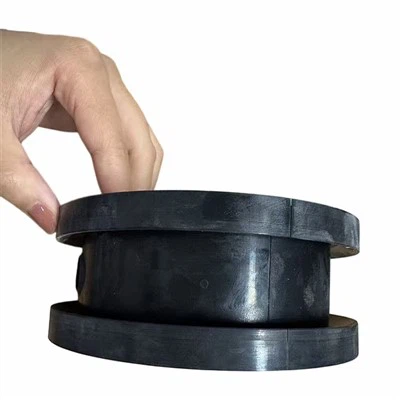
If you’ve tried a standard FKM O ring and it just isn’t cutting it, or you’re working on a new project and need a custom seal that won’t fail, hit us up to talk. Send over your part specs, or even a sample of what you need, and we can give you a quote and a timeline. No hoops to jump through, no confusing sales calls, just straight answers from people who know FKM O rings inside and out.
Rubber Buffer References
- "FKM Elastomers: Properties and Applications," Elastomer Technologies Association, 2022
- "Custom O-Ring Design and Manufacturing Guidelines," Society of Tribologists and Lubrication Engineers, 2021
- "Chemical Resistance of FKM Compounds," DuPont Performance Elastomers, 2023
Haining Chaoyue Seals Co., Ltd.
As one of the most professional fkm o ring manufacturers and suppliers in China, we offer a wide range of products with superior quality. Please feel free to wholesale high quality fkm o ring made in China here from our factory. Also, custom service is available.
Address: Building 9, 158 Lianhong Road, Yuanhua Town, Jiaxing, Zhejiang, China.
E-mail: chaoyue@cyseals.com
WebSite: https://www.hncyseal.com/
