Hey folks, if you’re deep in the world of high-voltage transformers, large motors, or fancy new superconducting equipment, you’ve probably stumbled on those little copper or aluminum wires that look like they’re neatly stacked but wrapped tight—wait, no, not just wrapped. You’ve seen continuously transposed conductors (CTCs) and are probably staring at your screen going, “Where do I even get these without jumping through 10 hoops?” Continuously Transposed Conductors
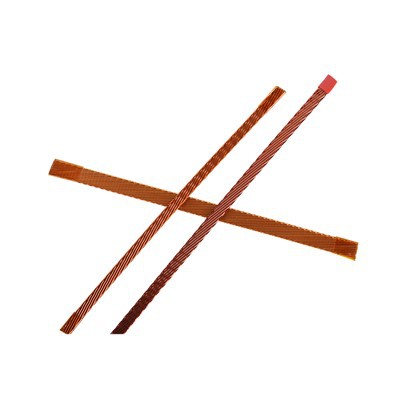
Full disclosure: I’m with a CTC supplier, so I’m not gonna pretend this is some unbiased third-party guide. But I’ve been doing this for years, fielding calls from transformer engineers, motor design leads, and even a couple of small-batch reactor builders who all ask the same thing. So let’s break this down like we’re chatting over a coffee (extra hot, because transformer specs are never boring)—no stuffy jargon, no corporate fluff, just real info on where to find CTCs that actually work for your project.
First, let’s level set for anyone who’s still going, “Wait, what’s a CTC again?” Super quick: Regular litz wire works for low frequencies, but when you’re dealing with 50/60 Hz and currents that make your phone charger look like a firefly, CTCs are the way to go. They’re made of multiple thin conductor strands twisted (transposed) so each strand takes turns on the outside and inside of the bundle—eliminating that annoying skin effect where current only sticks to the outer edge, which would overheat your gear and make your boss mad. They’re used in power transformers, traction motors for trains, large generators, even some superconducting magnets. Got it? Good.
Now, the question: Where do you buy these? Let’s start with the obvious, then dig into the under-the-radar spots that most folks miss (because Google only shows you the same 5 names, and half of them don’t even make their own CTCs—they just resell scrap wire).
First up: Specialized electrical component manufacturers that actually produce CTCs. These are the people who have the machines that do the transposing in-line, the quality control teams that check strand alignment and insulation thickness down to the micron, not just the guys who buy bulk copper and wrap it in plastic. When I say specialized, I mean companies that don’t just do wiring—they focus on magnet wire, transposed conductors, and custom coil windings. A lot of these are smaller to mid-sized operations, not the giant ones that make power grid equipment, because CTCs require precise, tailored runs. Like, if you need a 120-strand CTC with 0.2mm copper strands and a Class F insulation rating for a 2 MVA transformer, a big generic wire company might quote you a 6-week lead time and say “that’s the only size we make.” The good specialized shops? They can knock that out in 2 weeks, no minimum order for small test batches (more on that later).
Here’s the catch with these guys: You can’t just email them and say “send me a CTC” and get something that works. You need specs: Strand material (copper or aluminum, sometimes silver-plated for high-freq superconductors), number of strands, strand diameter, insulation type (polyimide, Nomex, enamel, whatever your transformer or motor needs), transposition pitch, and maybe even resistance tolerance. The specialized shops know this, so don’t be intimidated—they’ve talked to 100s of design engineers, so they’ll walk you through it. A lot of my customers come to us with a sketch of their coil and go, “I need something that fits this slot without overheating,” and we reverse-engineer the specs for them. That’s the value of going to a real CTC supplier, not a middleman.
Next, industrial supply distributors who specialize in heavy electrical gear. Wait, not the Amazon or Grainger guys (though Grainger does carry basic stuff, but not custom CTCs). I’m talking about distributors that cater to transformer OEMs, power equipment repair shops, and large-scale manufacturing facilities. These distributors have direct ties to CTC makers, so if you need a standard off-the-shelf CTC (like 48-strand, 0.5mm copper, Class H insulation), they can get it to you in a week. The downside? They mark up the price, and they don’t do custom runs. If your project is a prototype or a one-off for a new product, a distributor might not be able to help—they only stock what sells in bulk. But if you need 1000 meters of a standard size for a replacement transformer, they’re a solid option.
Now, the spots that most engineers overlook: Custom wire and coil winding shops that also do CTCs. A lot of these are family-owned operations that have been around for decades, originally doing small motor windings for local factories, and added CTC machines when the transformer boom hit in the 2000s. Why are these great? They’re flexible. Like, if you need a 50-meter test run for a lab experiment, or a weird strand count that’s not listed on any spec sheet, they’ll do it for a small fee, no minimum order. I’ve seen these shops work with startups making electric buses, which need custom CTCs for their traction motors that don’t fit standard OEM specs. The only downside is you need to vet them—ask for samples of their past CTC work, check if they have ISO certifications for electrical components, because some small shops might skip the insulation testing to cut costs. But if you find a good one, they’re way more personal and responsive than the big guys.
Wait, let’s talk about the stuff to avoid, because I get calls about this all the time. I had a guy last month who ordered “CTC” from a random Alibaba supplier, and when it arrived, the strands were only transposed halfway, so when he tested it for his transformer, the resistance was 30% higher than it should be—total waste of money. So avoid random resellers on general e-commerce sites, avoid suppliers that won’t give you test samples, and avoid anyone who says “CTC is just twisted litz wire.” It’s not. Litz is for low power, low freq. CTC is engineered for high power, 50/60 Hz, where every strand needs to be fully transposed along the entire length of the conductor. That difference is why your transformer doesn’t overheat after 6 months of running.
Now, the part I get the most questions about: Prototyping vs. full production. If you’re just testing a new design, don’t order 10 km of CTC from a big supplier. Order a 50 or 100 meter test run. Good CTC suppliers will give you that, no questions asked. We do that all the time—small startups and university labs call us for prototypes, and we get them samples in 3 days. Why? Because if their prototype fails, they don’t want to be stuck with 10 km of wire they can’t use. Once your prototype works, then you scale up to full production runs. That’s the sweet spot—find a supplier that works with you at every stage, not just when you’re ordering 10,000 meters.
Now, let’s get real about pricing. I’m not gonna lie, CTC isn’t cheap. It’s more expensive than regular magnet wire, obviously, because of the transposing process, custom specs, and strict quality control. But if you buy from the right supplier, you’re not paying for middlemen, you’re paying for something that will make your equipment run efficiently, last longer, and not blow up in 2 years. A lot of people try to cut corners by buying the cheapest CTC, and then they end up replacing their transformer or motor way sooner, which costs them way more in the long run.
Here’s the thing: Every project’s CTC needs are different. If you’re a small motor shop making replacement parts for old 1980s industrial motors, you’ll need a different supplier than a big transformer OEM building 100 MVA units for a power grid. If you’re a startup building a new type of superconducting reactor, you might need a supplier that works with specialized materials like silver-plated copper or high-temperature superconductors. There’s no one-size-fits-all answer here, but the key is to work with a supplier that listens to your needs, not just their price list.
So, what do you do next? If you’re ready to stop Googling “where to buy CTC” and actually get the right conductor for your project, reach out to a supplier that specializes in CTCs. Look for one that has experience in your industry—transformers, motors, generators, whatever. Ask if they offer test samples, custom runs, and quality testing (like dielectric strength checks, resistance verification, strand alignment). Don’t be shy about sharing your specs or your budget—good suppliers will work with you to find a solution that fits.
Wait, let’s wrap this up with a quick reality check. I know a lot of engineers hate talking to salespeople, especially when it’s for a part that’s as specific as CTC. But the best CTC suppliers aren’t just sales guys—they’re people who understand the end product. We’ve been on site at transformer factories, seen what happens when a bad CTC causes a coil to overheat, we know how important each strand is to the whole system. So when you reach out, be clear about what you need, ask questions, and don’t settle for someone who gives you a generic answer like “we have CTC in stock.”
At the end of the day, CTCs aren’t just wires—they’re the backbone of the equipment that powers our factories, our trains, our grid. Getting the right one matters. So skip the random resellers, skip the middlemen, and go for a specialized supplier that can work with you from prototype to full production. If you’re ready to chat about your CTC needs, feel free to reach out.
Enamel Wire References
- NEMA Standard TP 1-2019, Continuously Transposed Conductors for Power Transformers
- IEEE Standard C57.19.00-2020, General Requirements for Power Transformers and Reactors
- Handbook of Electrical Design, Volume 2: Power and Magnetics, McGraw-Hill Education, 2021
Tianjin Jingwei Power Technology Co., Ltd.
As one of the most professional continuously transposed conductors manufacturers and suppliers in China, we’re featured by quality products and good service. Please rest assured to buy durable continuously transposed conductors made in China here from our factory. Contact us for more details.
Address: No.1 Chuangxin Rd. Xiaozhan Industrial Park, Jinnan District, Tianjin, China
E-mail: info@jwdc.cn
WebSite: https://www.jw-dcs.com/
