Hey there, ever found yourself staring at a lab setup, wondering how exactly they mix stuff that’s just… not playing nice? Like, say you’re trying to blend plant extracts into a consistent suspension, or break down bacterial cells to get at their DNA, or even mix a tiny bit of oil into water for a skincare product—good luck getting that to mix evenly with just a stir bar or a magnetic stirrer. That’s where an ultrasonic homogenizer (sometimes we shorten it to just “ultrasonic homo” around here, no fancy jargon required) comes in. And since I’m the guy on the supplier end of these, let’s break this down like I would to a new lab tech who just got handed one and is Googling what it actually does. Ultrasonic Homogenizer

First off, let’s get the basics right—no textbook-style paragraphs here. Ultrasonic homogenizers aren’t just fancy blenders. They use sound waves that are way higher than what humans can hear (think 20 kHz or higher, for reference, the highest you can pick up is like 20 kHz when you’re a kid, so these are all above that range). The key term here is cavitation, but I’ll keep it simple: when those high-frequency sound waves blast through a liquid, they create tiny, instantaneous bubbles that form and then collapse super fast—like, microseconds fast. That collapse generates a tiny, super-strong burst of energy, heat, and pressure, right at the point where the bubble pops. That energy is what does all the work, not just stirring with speed.
Let’s contrast that with what you’re probably already using. A regular stirrer spins fast, which mixes big volumes, but if you have small samples, or stuff that’s really viscous, or particles that need to be broken down, it’s clunky. A magnetic stir bar might leave a vortex that traps air, or it can’t get particles smaller than, say, a millimeter. An ultrasonic homogenizer? You get particle sizes down to nanometers if you need ’em. No vortex (well, usually not a bad one), and the energy goes directly where you need it, not just churning the whole sample. I’ve seen people use them for everything from 0.5 mL microcentrifuge tubes to 100 L batches for industrial stuff—they’re way more versatile than most folks realize at first.
Now, what do people actually use these for? Let’s get into real-world examples because that’s what matters. If you’re a biologist, you use ’em to lyse (that’s lab talk for break open) cells—plant cells, bacterial cells, yeast—so you can extract proteins, DNA, or RNA. I had a customer last month who works on algae biofuels; he was struggling to get past the cell wall of tough algae strains, and a basic ultrasonic homogenizer cut his extraction time from 2 hours to 15 minutes. That’s not a flex, that’s actual time saved in the lab.
If you’re in materials science? Maybe making nanomaterials—like silver nanoparticles for conductive inks, or graphene suspensions. Those particles clump together super easily, and the cavitation from the homogenizer breaks those clumps apart evenly, so every particle is the same size. No more inconsistent ink that prints splotchy, no more graphene that’s useless because it’s all lumped up.
Skincare and personal care is another big one. People want those fancy serums with things like vitamin C or CBD evenly mixed, not just sitting at the bottom of the bottle. Ultrasonic homogenizers can mix those oil and water phases together way better than a regular emulsifier, so the product has a smoother texture, longer shelf life, and the active ingredients are actually distributed the way they’re supposed to be. I worked with a small skincare brand last year that upgraded from a hand mixer to our ultrasonic model, and they cut their product defect rate by 30%—game changer for a small business.
Even food and beverage? Yeah, believe it or not. Things like homogenizing milk to keep the fat from separating, or making uniform salad dressings that don’t have oil pooling on top. There’s also stuff like producing nano-emulsions for functional foods, where you can mix vitamins into drinks without them settling. The food guys might not call it “homogenizer” all the time, but it’s the same tech—just scaled a bit for larger volumes, same core principle.
Wait, let’s talk about how they’re set up, because that’s another thing people ask. Most have a generator (the part that makes the high-frequency sound waves), a transducer that turns those electrical waves into mechanical vibrations, and a probe (the horn) that you stick directly into your sample. Some smaller ones are cup-based, where you put the sample in a tube that’s sitting in a bath, but the probe type is way more efficient because the energy goes straight to the sample, not losing it to the bath. I always tell customers to go probe-based unless they’re dealing with really heat-sensitive samples—wait, right, heat! That’s a key point. The cavitation does generate heat, so if you’re working with something that breaks down at high temps (like certain enzymes), you can use a probe with cooling, or run the homogenizer in short bursts, and maybe use an ice bath. No, it doesn’t cook your sample if you use it right—just don’t leave it running for 10 minutes straight on high power, that’s a rookie mistake.
Common myths I hear, too. First: “ultrasonic homogenizers are only for small lab samples.” No way, we make ones that handle 100+ L batches for industrial production. Second: “they’re super expensive.” Yeah, the high-end industrial ones cost more, but there are budget-friendly lab models that fit most university or startup budgets. You don’t need a $10k unit if you’re just doing small-scale extractions or mixing for prototyping. Third: “they’re hard to use.” Modern ones have digital controls, presets for common applications (like cell lysis, nano-emulsions), and most come with a quick start guide. I’ve had customers call me panicking because their first run didn’t work, and 9 times out of 10 it was just the probe not being submerged deep enough, or power set too low—nothing major.
Now, as the supplier, what do I actually bring to the table that’s not just a Google search? I know this tech inside and out, and I don’t push a 100 L industrial unit on a grad student who only needs 10 mL batches. I ask questions: what volume are you working with? What’s your sample type— tough cells, delicate compounds, viscous liquids? Do you need temperature control? How many samples are you running at once? That way, I can point them to the right model, not just the most expensive one.
I also do follow-up, because this isn’t like buying a toaster. Lab equipment breaks, or you have questions on a new application. Last quarter, a customer called because they were trying to homogenize ceramic nanoparticles and weren’t getting the size they needed. We walked through adjusting the amplitude, the pulse time, the probe tip size—turned out they were using a too-small tip that wasn’t delivering enough energy. Fixed in 10 minutes over the phone, no need to send it back. That’s the stuff people don’t tell you when you’re just buying from a random website.
So, who should even consider one? If you’re tired of inconsistent mixes, long processing times, samples that clump or separate, or not being able to get small enough particle sizes. If you’ve tried every stirrer, blender, and emulsifier out there and still hitting a wall, an ultrasonic homogenizer is likely the missing piece.
I’ve seen this tech evolve a lot in the last 10 years, too. Back in the day, they were big, clunky, only for big industrial labs. Now there are portable ones that fit on a bench, battery-powered ones for field work if you need to process samples on site, and even models that work with automation for high-throughput labs. The applications keep expanding too—recently, we’ve had more customers using them for wastewater treatment, breaking down microplastics, or for creating new types of battery materials. It’s not just a lab gadget anymore, it’s a go-to tool for any industry that needs uniform particle size or mixing.
Wait, let’s circle back to that cavitation thing because it’s the heart of how it works. When the sound waves move through the liquid, the pressure goes up and down. Low pressure makes tiny bubbles, high pressure crushes them. That crush is so powerful, it creates micro-jets of liquid moving at hundreds of meters per second, right at the surface of particles. Those micro-jets knock clumps apart, break cell walls, mix immiscible liquids (like oil and water) into tiny droplets. That’s way more effective than just shearing from a stirrer, which only hits the big stuff.
I should also mention maintenance, because people forget that. The probe tip wears down over time—if it’s scratched or eroded, it won’t vibrate right, so the cavitation is weaker. You just need to replace the tip every so often, which is cheap and easy. And you clean it between samples, obviously—no cross-contamination, which is non-negotiable in labs. Most units come with a small cleaning kit, and I’m always happy to walk someone through that if they’re new.
At the end of the day, I get it—lab equipment is a big investment, and you want to make sure it’s going to actually solve your problem, not just be another thing gathering dust on the shelf. That’s why I don’t do pushy sales stuff. If you’re a hobbyist who’s just mixing paint for a side project, a $50 ultrasonic cleaner off Amazon might work, but if you’re doing actual research, production, or something where consistency matters, you need a proper ultrasonic homogenizer built for that.
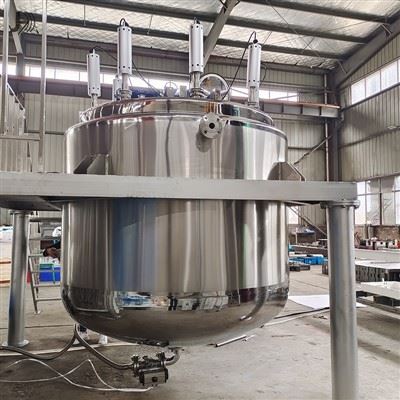
So, if you’re tired of fighting with messy mixes, slow processing, or samples that don’t turn out right, feel free to reach out. I can walk you through different models, answer any questions about what it can do for your specific application, and help you pick something that fits your needs and budget. No weird fine print, no hidden fees, just straight talk about a tool that’s made a huge difference for so many of my customers.
Ultrasonic Extractor References
- Kent, M. (2019). Ultrasonic Homogenization: Principles and Applications. Journal of Laboratory Automation, 24(3), 217-232.
- Mason, T. J. (2018). Ultrasonic cavitation and its uses in industrial processing. Ultrasonics Sonochemistry, 48, 1-8.
- Zhang, L., et al. (2021). Applications of ultrasonic homogenizers in nanomaterial synthesis. Materials Today Chemistry, 21, 100527.
- Food and Drug Administration. (2020). Ultrasonic processing for food emulsification and homogenization. Food Technology, 74(11), 45-52.
- Green, R. J. (2022). A beginner’s guide to selecting ultrasonic homogenizers for biological sample preparation. BioTechniques, 72(4), 189-194.
Hangzhou Precision Machinery Co., Ltd.
Hangzhou Precision Machinery Co., Ltd. is one of the most reliable manufacturers and suppliers of ultrasonic homogenizer in China, also supports custom service. With abundant experience, we warmly welcome you to buy advanced ultrasonic homogenizer from our factory.
Address: NO.1, 10th Rd. Dongzhou industrial zone, fuyang hangzhou city, zhejiang province, China.
E-mail: abby@jh-ultrasonic.com
WebSite: https://www.jh-ultrasonic.com/
